
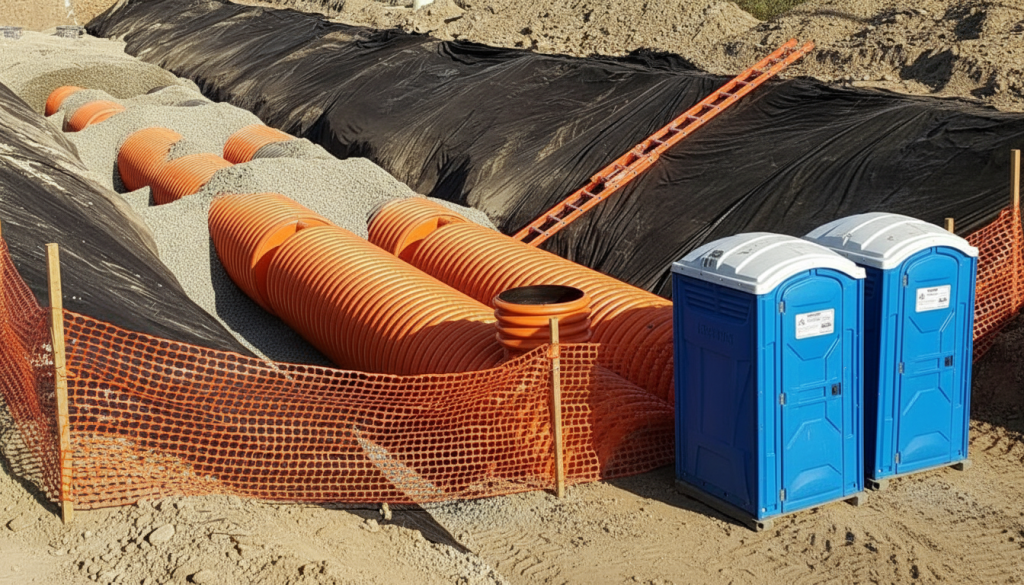
In modern stormwater management systems, understanding the difference between detention and retention tanks is essential for proper planning and design. Both systems protect property and infrastructure by regulating stormwater runoff, but they do so in very different ways. Whether a project involves parking lots, residential neighborhoods, or large-scale developments, these systems help manage stormwater while maintaining compliance with environmental standards.
The distinction comes down to how they store water and how that water is released. Detention tanks are built to temporarily hold runoff and release it at a controlled rate, while retention tanks permanently store water for infiltration or reuse. Each serves a specific function in creating balanced and sustainable drainage systems.
How Detention Tanks Work
A detention tank serves as a temporary holding structure that controls the discharge of stormwater runoff into downstream networks. During heavy rainfall, large volumes of water are collected and released slowly back into the sewer system or storm drains. The system slowly releases the water after the storm subsides, preventing flooding, erosion, and infrastructure overload.
Detention systems are part of broader stormwater management systems and are often installed beneath parking lots or open areas to conserve space. A stormwater detention tank can be made from concrete, plastic, or steel, depending on site conditions and load requirements.
Inside these tanks, outlet structures and orifices are designed to control discharge rates. Flow from the outlet pipe moves through an outlet control structure, which ensures water exits at a controlled rate, mimicking natural infiltration and minimizing erosion downstream.
How Retention Tanks Differ
A retention tank, by contrast, is built to store water permanently. Instead of discharging the entire volume, it retains a base level of water that supports infiltration and groundwater recharge. This method not only controls flooding but also improves water quality by allowing sediments and pollutants to settle before water exits.
In regions with limited surface space, retention tanks complement stormwater detention systems by offering long-term storage solutions. They are also integrated into sustainable management practices, where retained water is reused for irrigation or non-potable applications.
Retention tanks form an important part of low-impact development strategies because they keep water level stable, reduce stress on municipal sewer systems, and promote long-term environmental health.
The Relationship Between Detention and Retention
While these systems perform different functions, they often work best when used together. Detention and retention designs can be integrated into one structure, where the upper portion handles temporary flow while the lower section maintains permanent storage. This dual system maximizes capacity, especially during heavy rainfall, when managing both short-term and long-term runoff becomes critical.
The combined system also improves water quality by slowing flow velocity and allowing suspended materials to settle. Using stormwater filter socks or storm drain filter socks enhances filtration and prevents clogging within pipes and outlets. These devices capture debris, sediment, and oils before the water is discharged.
Regulatory Considerations and Design Requirements
Local and federal regulations require engineers to design stormwater management systems that protect both infrastructure and the environment. The goal is to maintain pre-development flow conditions even after a site is built. For detention tanks, this means ensuring the controlled rate of discharge matches allowable peak flow thresholds.
Designers evaluate volumes of water, water flows, and downstream channel capacity to determine tank size and outlet specifications. For retention systems, the focus shifts to long term water quality management and infiltration capability.
An effective management practice includes the use of outlet structures, flow control devices, and outlet control structures that provide flexibility for future expansion or maintenance access.
Integration Within Drainage Systems
Both detention and retention systems are crucial components of complete drainage systems. The stormwater detention tank typically connects to a network of catch basins and storm drains, while the retention tank links to infiltration zones or groundwater recharge beds.
A properly designed network prevents overloading the sewer system and directs water flows efficiently through all components. Engineers must ensure the slope and size of the outlet pipe match hydraulic requirements to achieve stable water level control throughout the system.
Practical Applications in Development
Developers often install detention tanks beneath parking lots and paved areas where space is limited. These underground tanks slowly release captured water through an outlet control structure, preventing downstream surges that can cause erosion.
Retention systems, meanwhile, are commonly used in green infrastructure or landscaped areas. They not only store water but also support natural filtration. Combining the two provides a hybrid approach that meets both short-term and long-term stormwater goals.
This balance is particularly valuable in urban areas where stormwater runoff management must meet strict permitting and sustainability guidelines.
Maintenance and Longevity
Routine maintenance determines how effectively both systems perform over time. Inspections should verify that stormwater filter socks and storm drain filter socks remain clean and functional, preventing sediment buildup and blockages. Sediment removal ensures continuous flow efficiency and protects outlet structures from damage.
A well-maintained stormwater detention tank can operate for decades, especially when paired with sound management practices and regular monitoring. Retention systems require less frequent maintenance but should be checked periodically to confirm infiltration rates and sediment accumulation levels.
Choosing the Right System
Selecting between detention and retention depends on site conditions, regulatory requirements, and project goals. Areas with poor soil infiltration may rely more on detention tanks, while locations with permeable soils benefit from retention tanks.
Ultimately, integrating both creates resilience and enhances performance during heavy rainfall. Each contributes to comprehensive stormwater management systems that manage stormwater responsibly and sustainably.
Conclusion: Designing for Performance and Compliance
Both detention and retention systems serve as essential tools in modern water infrastructure. Detention systems temporarily store and slowly release runoff, while retention systems store water permanently for infiltration and reuse. Together, they create a balanced solution that protects property, improves water quality, and supports environmental compliance.
When properly designed with the right outlet control structure and outlet pipe, these systems ensure stable water level control, protect storm drains, and maintain efficiency for the long term. In every sense, success in stormwater design depends on understanding the balance between storage, discharge, and regulation—the key to resilient and sustainable stormwater management systems.